
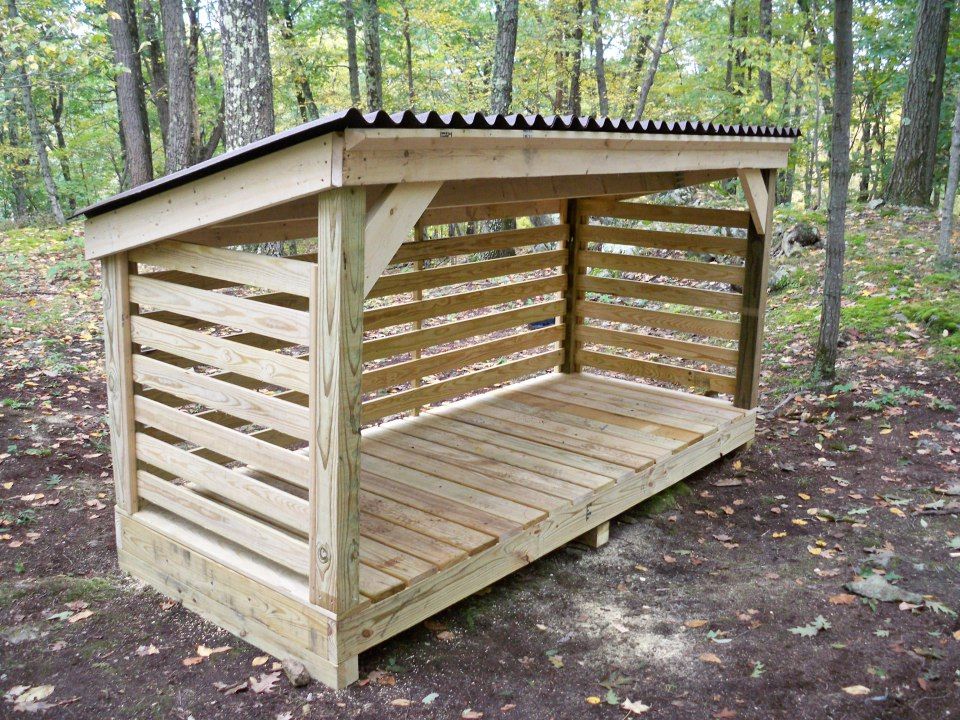
A useful firewood storage shed keeps rain and snow off the top of the stack while letting moisture escape through the sides. The best design is usually a roofed, well-braced structure with a raised base and generous cross-ventilation—not an airtight box. Plan the site, capacity, drainage and fire separation before choosing the framing.
Choose a Safe, Practical Location
Start with local requirements. Check zoning setbacks, easements, property lines, wildfire rules and any guidance from your fire department. Separation recommendations vary by setting. In wildfire-prone communities, the U.S. Fire Administration advises keeping wood piles on bare ground or gravel, or in an enclosed shed, at least 30 feet from the home when possible. Its general home-fire pictograph places wood piles and propane tanks 10 to 30 feet from the house. Treat those figures as context—not a substitute for stricter local rules.
- Keep the structure away from the house, decks, eaves, grills, fuel cans, propane cylinders and other ignition sources.
- Provide an all-weather path that is safe to use while carrying wood in rain, snow or darkness.
- Do not block utility access, septic components, drainage paths or emergency egress.
- Orient the open side so prevailing storms do not drive rain or snow directly into the stack.
For the fire-safety rationale, see the U.S. Fire Administration’s wildfire guidance and its wood-pile separation pictograph.
Start With Drainage and a Load-Bearing Base
Firewood is heavy, so a rack or shed base must remain stable when fully loaded. Choose high ground or establish positive drainage so water does not collect beneath the pile. A compacted gravel or other locally appropriate base can reduce soil splash and vegetation around the structure. Raise the bottom course of wood above the ground on a durable rack, skids or framing designed for the expected load.
Avoid resting a full stack against lightweight wall panels. The floor, supports, connections and any retaining rails must resist both the downward load and the sideways pressure of an uneven pile. If you are building a permanent structure, use the site’s soil conditions and frost exposure to select an appropriate shed foundation, and provide anchoring suited to the shed and location.
Use the Roof to Block Water and the Sides to Move Air
A dependable firewood shed combines a sound roof with open or slatted sides. Adequate overhangs help keep wind-driven rain off the ends of the stack, while openings on more than one side promote cross-ventilation. Roof runoff should discharge where it will not soak the base, form ice on the access path or damage a neighboring property.
Do not wrap the entire stack tightly in an impermeable tarp. A top cover can be useful on a small rack, but leave the sides open so water vapor can escape. Likewise, avoid putting freshly split wood into a sealed, unventilated shed. Our guides to shed roof construction, shed ventilation and roof drainage and gutters explain the related building details.
Size the Shed Around Real Use
Estimate how much wood you normally burn between deliveries, then add room to rotate stock and retrieve it without destabilizing the pile. Firewood terms and dimensions can differ by location, so confirm what a seller means by a cord, face cord or truckload before laying out the structure.
- Allow separate zones for newer and seasoned wood.
- Keep a clear aisle or access face rather than packing wood into an unreachable corner.
- Limit stack height to what can be loaded and removed safely.
- Use dividers or shorter bays if a long stack could shift or lean.
- Leave inspection space around the stack instead of pressing wood tightly against walls.
A compact covered rack may be enough for occasional fires. A larger three-sided shed makes more sense for regular heating, provided the site and fire separation are appropriate. See these firewood shed design ideas for layout inspiration.
Reduce Pest and Disease Risks
Moving firewood can spread insects and plant diseases. Buy it near where you will burn it, respect quarantines and do not transport firewood to a new region simply because it looks clean. USDA APHIS recommends buying or collecting firewood where it will be burned and choosing certified heat-treated wood when available. Review the agency’s firewood movement guidance before hauling wood across county or state lines.
Store the main supply outdoors rather than bringing a large quantity into the living space. Inspect wood and the shed periodically for insects, rodents, rot, unstable stacks and roof leaks.
Plan the Structure Before You Build
A three-sided firewood shed still needs a complete load path. The roof, posts, beams, bracing, base and anchors must work together for local wind, snow and soil conditions. An open front can reduce wall area but also removes a source of bracing, so do not omit diagonal or engineered bracing without a suitable alternative. Use corrosion-resistant fasteners compatible with the lumber treatment, and keep preservative-treated material from contaminating wood intended for cooking fires.
Permits and structural requirements vary. For large spans, tall walls, heavy snow regions or exposed sites, have the design reviewed locally or by a qualified professional. Also follow the appliance manufacturer’s instructions and the USFA fireplace and wood-stove safety guidance when the wood is eventually burned.
Firewood Shed Planning Checklist
- Confirm setbacks, wildfire rules, utilities and drainage.
- Choose a convenient route that remains safe in winter.
- Size the rack or shed for the amount actually purchased and used.
- Design the base, supports and bracing for a fully loaded stack.
- Raise wood off the ground and protect the top from precipitation.
- Leave open or slatted sides for cross-ventilation.
- Direct roof runoff away from the wood, path and neighboring property.
- Buy local or certified heat-treated firewood and obey quarantines.
- Inspect the roof, anchors, fasteners and stack stability each season.
Choosing a Plan
If you want a larger collection of layouts to compare, Ryan’s Shed Plans is a paid affiliate recommendation. Use any plan as a starting point, then adapt the foundation, structural details, separation and permits to your site and local requirements.