
The best shed siding balances appearance, installed cost, weather exposure and the maintenance you are willing to do. Vinyl, engineered wood, solid wood, metal and fiber cement can all suit a shed, but they do not share the same installation details. Choose the wall assembly before buying the finish.
This guide compares the main options and explains the details that help keep water out and allow the wall to dry. Connect the siding choice to your shed construction plan. Follow the selected product’s current instructions and the design requirements for your site; the examples here are not universal installation specifications.
Affiliate disclosure: We may earn a commission if you buy through the shed-plan links on this page.
Choose siding for the whole wall, not just its appearance
Cladding is the outer finish. Sheathing can provide structural support, while flashing and a water-resistive barrier manage water behind the finish. Some rated panel-siding products can perform more than one role in a specified assembly. Do not assume every siding panel replaces structural sheathing or wall bracing.
- Exposure: consider wind-driven rain, splashback, snow buildup, coastal conditions and nearby vegetation.
- Structure: confirm the substrate, framing spacing and attachment needed for the selected product.
- Use: a permanently open interior wall cavity and an insulated workshop may need different moisture-control details.
- Maintenance: decide whether you are prepared to repaint, refinish or replace damaged individual pieces.
- Appearance: compare lap siding, vertical panels and board-and-batten layouts, including corner and opening trim.
Our shed wall-framing guide covers the supporting structure. Resolve damaged or out-of-square walls before hiding them with new siding.
Vinyl siding: color choices with room for movement

Vinyl can provide a house-style finish without routine repainting. It needs a suitable backing surface, compatible trim and installation that allows temperature-related movement. Fastening panels tightly or trapping their ends can cause distortion.
Follow the exact product’s fastening and expansion-clearance requirements. The Polymeric Exterior Products Association’s installation manual is a useful starting reference. Do not treat the siding itself as a watertight barrier or block its intended drainage.
The previous version of this article said vinyl could not be painted. Some vinyl can be painted with an appropriate coating and color, but check the siding manufacturer’s approval and warranty first. Sherwin-Williams provides vinyl-painting guidance; incompatible coatings or colors can create problems. Paint also does not repair cracked or loose panels.
Engineered wood and panel siding: identify the exact product

“Composite” is a broad label, not a single material specification. Engineered wood siding such as LP SmartSide is not simply a mixture of vinyl siding and wood siding. Compare actual product documentation rather than assuming different brands or panel types install alike.
Panel products can suit a shed’s vertical layout, while lap products offer a different appearance. Check whether the selected panel is rated for the structural role you intend and whether it can attach directly to studs or needs sheathing. Joint support, fasteners, finishing and edge treatment remain product-specific.
LP’s panel-siding instructions illustrate why the exact assembly matters: limited exceptions for certain shed products and exposed interior cavities do not mean housewrap can be omitted behind every engineered-wood siding installation. Follow the chosen product and applicable requirements.
Protect cut edges and maintain specified gaps and clearances. Treated engineered wood is not immune to damage from persistent wetting, ground contact or poor flashing.
Solid wood siding: choose the species, profile and finish together

Solid wood offers a natural appearance and several profiles, including lap and board-and-batten. Durability varies by species, grade, exposure and detailing; a broad wood name alone is not a performance guarantee.
Ask the supplier about moisture condition, acclimation, fastening, end treatment and coating requirements. Allow the movement required by the profile. Do not assume a fastening pattern for one board width or species applies to all wood siding.
Paint, stain and a weathered finish have different maintenance implications. Inspect the lower edges and joints regularly, keep soil and plants away, and maintain the finish as recommended. A natural look still needs a wall that can shed water and dry.
Metal siding: check coatings, connections and compatibility

Metal siding includes a range of steel and aluminum profiles and finishes. Compare resistance to the site’s exposure, support spacing, fastening, trim and the practical risk of dents. Neither material should be treated as maintenance-free in every environment.
Galvanizing is a zinc coating used to protect steel, not simply a paint coating. Painted finishes can be applied as a separate layer. The American Galvanizers Association explains zinc-coating types. Ask the siding supplier which coating system suits your environment.
Use compatible fasteners and flashing, protect cut edges as specified, and remove cutting debris in accordance with the manufacturer’s instructions. Avoid incompatible metal contacts and chemicals. Confirm panel attachment and movement details instead of borrowing a screw pattern from an unrelated roof panel.
Fiber cement: durable cladding with specific handling needs
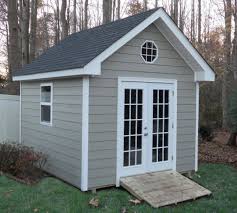
Fiber-cement siding is a different product family from engineered wood. It can suit a painted shed exterior, but its weight, brittleness, fastening and cutting requirements deserve planning. Moisture-resistant cladding does not make the wall behind it waterproof.
Use the product’s required substrate, clearances, flashing and attachment. James Hardie’s technical documents provide product-specific instructions. Support boards during carrying and cutting, and arrange help where their size and weight make solo handling unsafe.
Cutting fiber cement can release hazardous respirable silica dust. Follow the manufacturer’s approved cutting methods, dust controls and safety requirements; do not dry-cut casually with an ordinary saw or assume any face covering is adequate. Review James Hardie’s silica safety resources before work. Use a qualified installer if you cannot provide the appropriate controls.
Keep water moving out of the wall
Plan the drainage details before the first panel goes on. Water entering behind cladding must have a route back outside. Depending on the wall system, that may involve a water-resistive barrier, a drainage space, flashings and specific ventilation details.
- Integrate the wall’s drainage layer with the flashings at openings and transitions.
- Use required head, horizontal-joint and roof-to-wall flashings rather than relying only on caulk.
- Maintain the specified clearance above soil, paving, roof surfaces and other places where water collects.
- Keep required drainage gaps open; do not seal every joint indiscriminately.
- Use sealant only in the locations and with the joint preparation the manufacturer specifies.
There is no single clearance dimension suitable for every siding product. Check the instructions and applicable local requirements before establishing the bottom course. Coordinate the work with the window guide, door guide and roof-building guide.
Compare the complete installed cost
Do not compare only the price of a board or panel. Request quotes covering the same wall area and scope, including:
- Sheathing or repairs, drainage materials and any required furring.
- Corner trim, opening trim, starter pieces, flashings and fasteners.
- Primer, finish coats, cut-edge treatment and compatible sealants.
- Waste, delivery, tools, safe access, labor and disposal.
- Expected maintenance and availability of matching replacement pieces.
Measure the actual coverage and account for laps and cuts. A warranty term is not a guaranteed service life, and exclusions may depend on installation and maintenance. There is no universal cheapest siding once the whole assembly is included.
Maintenance and common siding problems
Cleaning without forcing water behind the finish
Start with the manufacturer’s gentle cleaning method. CertainTeed recommends mild cleaning and warns against high-pressure washing. Do not assume a pressure washer is appropriate for every siding or finish. Test approved cleaners in an inconspicuous area and follow their safety instructions.
Swelling, soft edges or repeated staining
Investigate water exposure, failed flashing and inadequate clearances before repainting. Redirect sprinklers and runoff, and keep plants from holding moisture against the wall. Persistent damage may involve the sheathing or framing and needs more than a cosmetic patch.
Buckled panels, loose boards or rust marks
Check movement allowances, attachment and product compatibility. Do not add fasteners indiscriminately or cover corrosion without finding its source. Consult the supplier about repair or replacement, and use our shed repair guide for the wider inspection.
Existing siding videos for visual context
These videos demonstrate examples, not specifications for every product. Follow current manufacturer instructions where details differ. The unavailable wood-siding video has been omitted from this guide.
Sheds For Home siding overview
Vinyl siding installation example
LP SmartSide installation example
Steel siding trim example
Choose plans that account for the siding assembly
Before ordering materials, confirm the wall layout, structural sheathing or rated panels, drainage details, clearances and finish schedule. Siding is part of the shed’s weather protection, not just its final decoration.
If you are comparing layouts, you can explore Ryan’s Shed Plans, a paid plan collection linked through our affiliate program. Review the current offer and confirm that the chosen plan contains the wall details you need. Purchased plans do not automatically establish suitability for your site, selected siding or local requirements.