
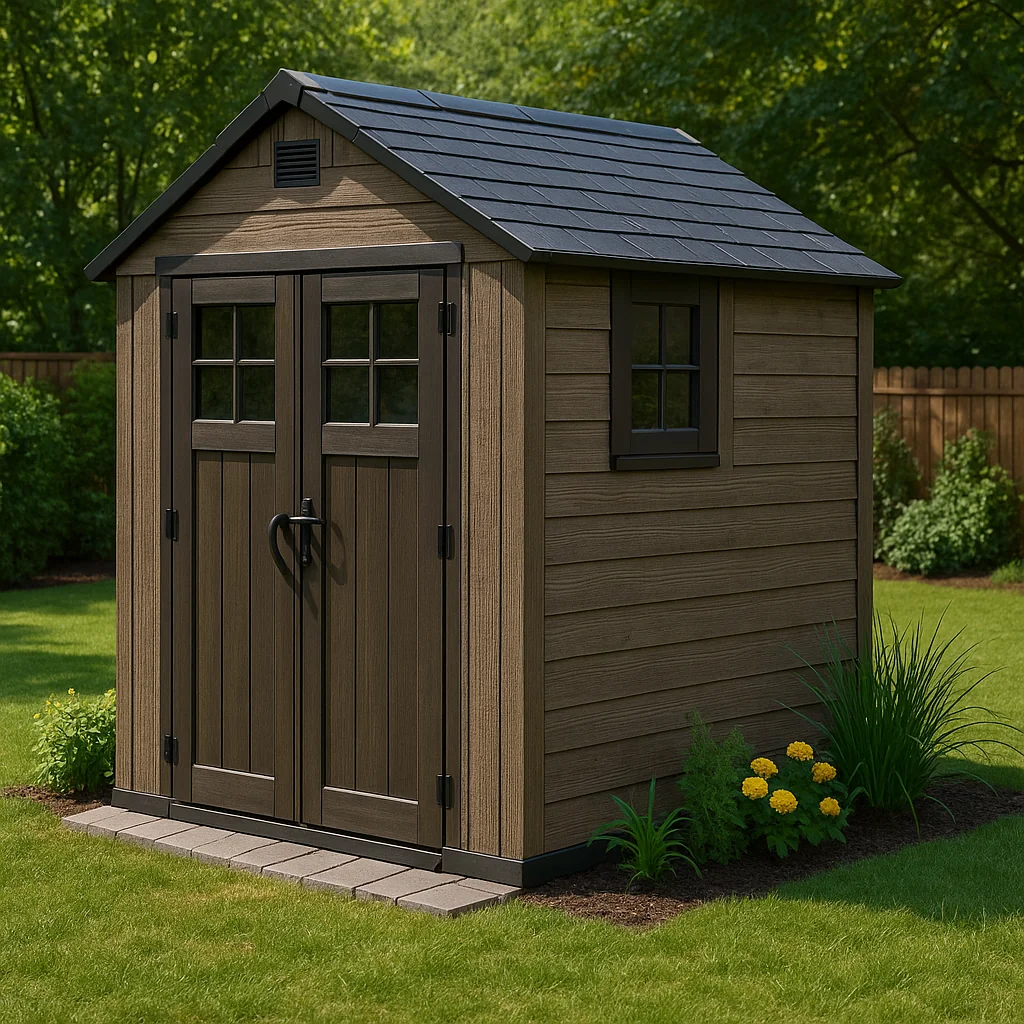
Keter Garden Sheds: Plan Storage Around Real Equipment
Independent research-based guidance. This is not a hands-on test of every model. Product specifications and availability can change; verify the current product page, manual and warranty for the exact model and region.
A garden shed works best when its layout is planned around the tools and equipment it must hold.
Compare the Exact Model
Before ordering, verify the widest stored item, clear door opening, shelf compatibility, a dry level base and access from the yard. Nominal shed dimensions do not always match the required base or usable interior space.
Prepare the Foundation First
Keter says the foundation is not included and warns in its US assembly-service information that assembly on grass voids the warranty. Build the level, stable footprint specified in the manual. Start with our shed foundation guide and compare gravel with concrete.
Assembly and Anchoring
Assembly requirements vary. Download the current manual, inventory all parts, use the listed tools and helpers, and choose calm weather. Square the structure before final tightening. Follow the model-specific anchoring instructions and local requirements; see our shed anchoring guide.
Moisture, Storage and Maintenance
Keep the site drained, roof and vents clear, and wet equipment away from walls. Use only manufacturer-approved attachment methods or freestanding storage. Keep the receipt, model number and foundation photographs with the warranty records.
Bottom Line
A suitable Keter shed is one whose exact footprint, access, capacity and weather requirements match your site and intended use. For the full comparison checklist, read our Keter shed selection, assembly and care guide.